
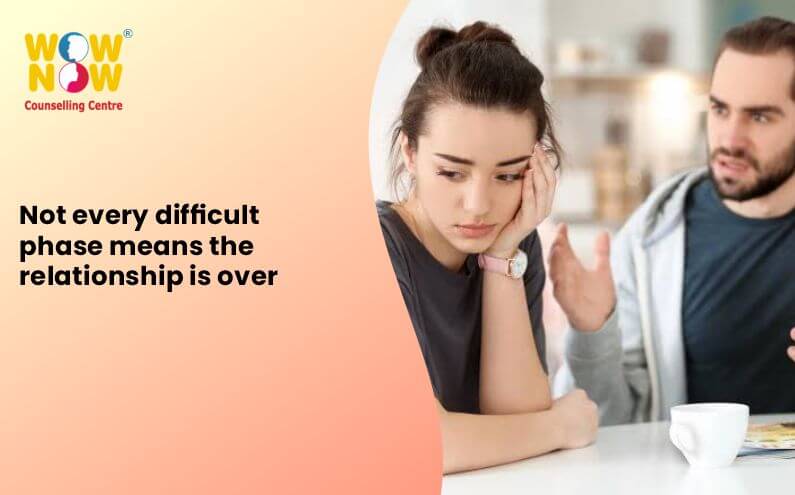
Not Every Difficult Phase Means the Relationship Is Over
There is a particular kind of exhaustion that comes with relationship struggles. The same argument keeps returning. Conversations feel shorter and more guarded than they used to be. You wonder if the closeness you once had is gone for good. If this sounds familiar, you are not alone, and you are not necessarily looking at the end of your relationship.
Many couples go through periods where things feel harder than they should. Communication problems, emotional distance, or repeated disagreements can make a relationship feel fragile, but a challenging period is not automatically a sign that the relationship has failed. Understanding what is actually happening, rather than assuming the worst, is often the first useful step. This is where relationship counselling can offer real clarity, not by promising to fix everything, but by helping both partners understand what is going on and what their options genuinely are.
This article looks at why relationships go through rough patches, how to tell the difference between a passing struggle and a deeper problem, and when professional support such as marriage counselling might be worth considering.
Why Do Relationships Go Through Difficult Phases?
Almost every long-term relationship experiences periods of strain at some point. This does not make a couple unusual or their bond weak. It reflects the reality of building a life alongside another person over time.
Some of the most common reasons relationships go through rough periods include:
- Communication breakdowns. Partners stop sharing what they are really thinking or feeling, often to avoid conflict, which can lead to misunderstandings piling up.
- Unresolved disagreements. When issues are pushed aside instead of discussed, they tend to resurface later, often in a bigger and more frustrating way.
- Changing expectations. As people grow and their priorities shift, what once worked for both partners may no longer feel balanced.
- Stress and external pressure. Work demands, financial pressure, family responsibilities, or health concerns can leave little emotional energy for the relationship.
- Emotional disconnection. Busy routines can quietly reduce the amount of meaningful time couples spend together, leading to a sense of drifting apart.
- Family-related concerns. Differences in how each partner relates to in-laws, extended family expectations, or family responsibilities can create ongoing tension, particularly within the Indian family context where extended family involvement is often significant.
- Major life changes. Marriage, relocation, parenthood, career changes, or health issues can shift the dynamic between partners, sometimes faster than either person can adjust to.
- Lack of quality time. When day-to-day life takes over, couples can go weeks without a real conversation, and small gaps in connection can widen over time.
None of these factors mean a relationship is destined to fail. They are simply common pressures that most couples encounter in some form. What matters more is how a couple responds to these pressures over time.
Does a Difficult Phase Mean the Relationship Is Over?
No. A challenging period does not automatically mean a relationship is over. Many couples go through phases of conflict, emotional distance, or uncertainty that can improve once both partners understand the underlying issues and are willing to work towards change.
It helps to separate two different situations. The first is a temporary relationship challenge, where both partners are frustrated or distant but still care about the relationship and are open, even if reluctantly, to working things out. The second is a more persistent pattern, where the same problems repeat without any real change, respect has eroded, or one or both partners have quietly checked out of trying.
A single argument, a stressful few months, or a temporary loss of closeness is rarely proof that a relationship has run its course. What tends to matter more is whether both people are still willing to engage with the problem, even imperfectly, rather than avoiding it completely.
At the same time, it would be inaccurate to say every relationship can or should continue. Some relationships involve patterns that are genuinely unhealthy, and recognising this honestly is just as important as recognising when a rough patch is temporary. The goal is not to assume the worst or the best, but to look clearly at what is actually happening between two people.
What Are the Signs That a Relationship Can Still Improve?
There are certain signs that often suggest a relationship has the capacity to move through a challenging period, even if things currently feel tense or distant.
- Willingness to communicate, even if the conversations are uncomfortable at first.
- Mutual respect, where disagreements do not turn into personal attacks or contempt.
- Accountability, where each partner can acknowledge their own part in a conflict rather than placing all the blame on the other.
- Emotional connection that still exists, even if it currently feels weaker than before.
- Openness to change, including a willingness to try new ways of communicating or spending time together.
- Shared effort, where both partners are contributing to resolving issues rather than one person carrying the entire relationship.
- The ability to discuss problems without shutting down completely, even if the conversation is difficult or emotional.
If these elements are present, even in a limited way, a relationship often has room to improve. Emotional distance in a relationship can be repaired in many cases, particularly when both partners recognise the distance and are willing to address it rather than ignore it. This does not mean progress will be quick or easy, but it does suggest there is something to work with.
When Should Couples Consider Relationship Counselling?
Not every disagreement requires professional support, but there are situations where relationship counselling can offer meaningful help.
Couples may want to consider relationship counselling when:
- The same arguments keep happening without resolution.
- Communication has become difficult, defensive, or has broken down almost entirely.
- One or both partners feel emotionally distant or disconnected.
- Trust has been affected and neither partner is sure how to rebuild it.
- Conflicts remain unresolved for long periods, creating ongoing tension.
- A major life change, such as marriage, parenthood, or relocation, has disrupted the relationship’s usual balance.
- There is genuine uncertainty about the future of the relationship, and both partners want clarity rather than continued guessing.
Many people search for relationship counselling near me or relationship counselling in India when they reach a point where they feel stuck, unsure of how to move forward on their own. This is a reasonable and often practical response. A trained counsellor can offer a neutral space where both partners can speak and be heard, something that can be hard to achieve during an emotionally charged conversation at home.
Relationship counselling is not only for couples who are close to separating. It can also be useful earlier, when communication issues or recurring conflict are noticeable but have not yet caused serious damage.
How Can Marriage Counselling Help Couples Through a Difficult Phase?
Marriage counselling offers a structured environment where both partners can express themselves and be heard without the conversation escalating into conflict. This structure is often one of the most valuable aspects of counselling, since many couples find it hard to have calm, focused conversations about sensitive topics on their own.
A counsellor trained in relationship dynamics can help couples:
- Identify recurring patterns that keep causing friction, even if the couple has not noticed them clearly before.
- Understand each partner’s perspective, including feelings or concerns that may not have been expressed directly.
- Improve communication by encouraging clearer, less defensive ways of talking about difficult topics.
- Address unresolved concerns that have been avoided or repeatedly pushed aside.
- Develop healthier ways of managing conflict, so that disagreements do not automatically turn into distance or resentment.
For couples who are unsure whether their relationship is worth working on, marriage counselling does not provide a guaranteed answer, but it can help both partners understand their situation more clearly. This clarity, in itself, is often valuable, whether it leads to renewed effort in the relationship or a more informed decision about the path ahead. Wownow Counselling Commenes offers support for couples looking to work through these concerns in a professional and confidential setting.
Can Better Communication Change a Struggling Relationship?
Communication problems in relationships are one of the most common reasons couples experience ongoing tension. The way partners talk to each other, or avoid talking to each other, often shapes how problems grow or shrink over time.
Improving communication does not mean talking more. It means talking differently. A few practical shifts can make a noticeable difference:
- Active listening, where each partner genuinely tries to understand the other rather than preparing a response while the other is still speaking.
- Expressing concerns clearly, using specific examples instead of vague complaints or generalisations.
- Avoiding blame, focusing on the issue itself rather than framing every problem as the other person’s fault.
- Setting healthy boundaries, so conversations do not turn into repeated cycles of criticism or withdrawal.
- Validating emotions, acknowledging how the other person feels even when you see the situation differently.
- Creating opportunities for constructive conversations, such as setting aside time to talk without distractions or interruptions.
Can counselling help a relationship improve its communication? For many couples, yes. A counsellor can help identify unhelpful communication habits, such as interrupting, deflecting, or shutting down, and offer more constructive alternatives. Better communication does not resolve every underlying issue on its own, but it often creates the conditions needed for other problems to be addressed more effectively.
When Is a Relationship Problem More Serious?
While many relationship struggles are workable, some patterns indicate a more serious concern that deserves honest attention. This includes situations involving repeated dishonesty, ongoing disrespect, a consistent unwillingness from one or both partners to engage with the relationship’s problems, or a complete breakdown of trust that neither partner is willing to address.
It is important to be clear here: relationship counselling is not a substitute for immediate safety planning or specialist support in situations involving abuse, coercion, threats, intimidation, or any concern for personal safety. If you are experiencing this kind of situation, please reach out to a qualified safety professional, a trusted support service, or local authorities as appropriate. Counselling can be valuable for many relationship difficulties, but safety concerns need to be addressed through appropriate specialist channels first.
For relationship difficulties that do not involve safety concerns, a more serious problem is not always obvious on the surface. It often shows up as a pattern rather than a single incident, such as repeated broken promises, a long-term lack of effort from one partner despite the other continually trying, or ongoing contempt that has replaced respect. Recognising these patterns honestly, without assigning blame to one person alone, is an important part of understanding whether a relationship’s problems are temporary or something that needs deeper attention.
How Can Couples Take the Next Step Without Rushing the Decision?
Deciding what to do next after a period of relationship difficulty can feel overwhelming, especially when emotions are running high. Taking a measured approach often leads to clearer decisions than reacting in the middle of a conflict.
A few practical steps can help:
- Identify the core issue. Try to separate the real underlying concern from the surface-level argument that keeps repeating.
- Have an honest conversation. Share how you feel without exaggeration or blame, and give your partner space to do the same.
- Recognise personal responsibility. Consider your own role in the relationship’s patterns, not to assign fault, but to understand the full picture.
- Allow time for reflection. Avoid making major decisions immediately after an argument, when emotions are still intense.
- Seek professional guidance. A neutral, trained perspective, such as that offered through relationship counselling, can help both partners see the situation more clearly.
- Avoid decisions made solely during moments of intense conflict. Decisions made in anger or exhaustion are rarely a reliable reflection of what either partner truly wants long term.
How do you know whether a relationship is worth working on? There is no universal answer, but a useful starting point is honestly assessing whether both partners are still willing to make an effort, communicate, and take responsibility for their part in the relationship’s challenges. If that willingness exists on both sides, there is usually something worth exploring further, whether independently or with professional support.
Moving Forward With Clarity, Not Assumptions
A challenging period in a relationship can feel overwhelming, confusing, and at times isolating. But a difficult phase does not automatically mean a relationship has come to an end. Many couples move through periods of conflict, communication problems, or emotional distance and come out with a clearer, more honest understanding of each other.
What tends to make the biggest difference is not avoiding the problem, but understanding it. Recognising the underlying issue, communicating honestly, taking responsibility for one’s own part in the relationship, and seeking appropriate support when needed can help couples make more informed decisions about their future, whatever that future looks like.
Relationship counselling does not promise to save every relationship, and no responsible counsellor would claim that it can. What it can offer is a structured, supportive space to understand what is really happening and to consider the options with more clarity than conflict alone usually allows.
If you and your partner are going through relationship difficulties and are unsure of the way forward, Wownow Counselling Commenes offers professional relationship counselling and marriage counselling support for individuals and couples across India. You do not need to have all the answers before reaching out. Taking the step to understand your situation, with guidance from a qualified professional, is often the most meaningful place to start.